
AI / DATA
Dagent: Multimodal AI Pipeline for Data Entry
OVERVIEW
Multimodal AI pipeline for data entry and processing.
TEAMMATES
Jhon Kim
TOOLS
Figma
THE BRIEF
How might we make it easier for SMBs to make data-driven decisions?
Think of a chain-restaurant owner that wants to analyze the rise and fall of their most popular dishes, or the manager of several local home goods stores that wants to predict the next big furniture trend. These are complex, wicked, data-entangled problems. Many small to medium-sized businesses' operations are too small to have specialized teams for these questions, but too big to keep relying on intuition and guesswork.
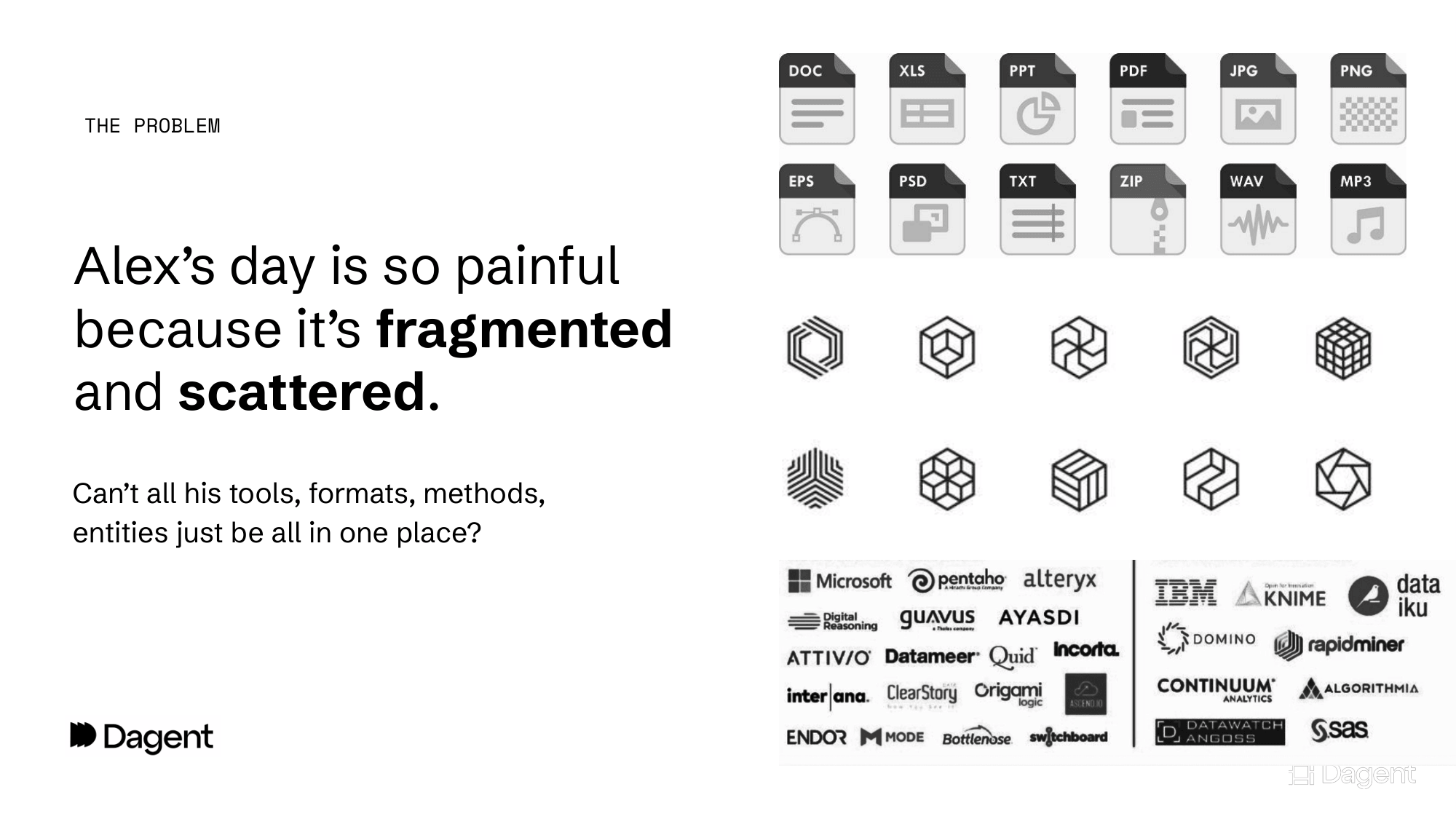
Often, their owner-operators want to look at both internal and external data sources: their own sales, plus social media trends, local or global updates, supply chain data, and more. However, it's a nightmare to gather all that data, process it, and make decisions from there.
Often, their owner-operators want to look at both internal and external data sources: their own sales, plus social media trends, local or global updates, supply chain data, and more. However, it's a nightmare to gather all that data, process it, and make decisions from there.
RESEARCH
Exploring the problem space
This was a massive problem. A large segment of the SMB market was basically flying blind when it comes to making dynamic business decisions.
To make sure we were on the right path, we did some quick research and held interviews with managers in the space. They revealed that tools were either too simple or too complex to accomplish the simple goal they wanted: multi-source, usable, and intuitive data analysis for their businesses.
To make sure we were on the right path, we did some quick research and held interviews with managers in the space. They revealed that tools were either too simple or too complex to accomplish the simple goal they wanted: multi-source, usable, and intuitive data analysis for their businesses.
WIREFRAMES
Designing the solution
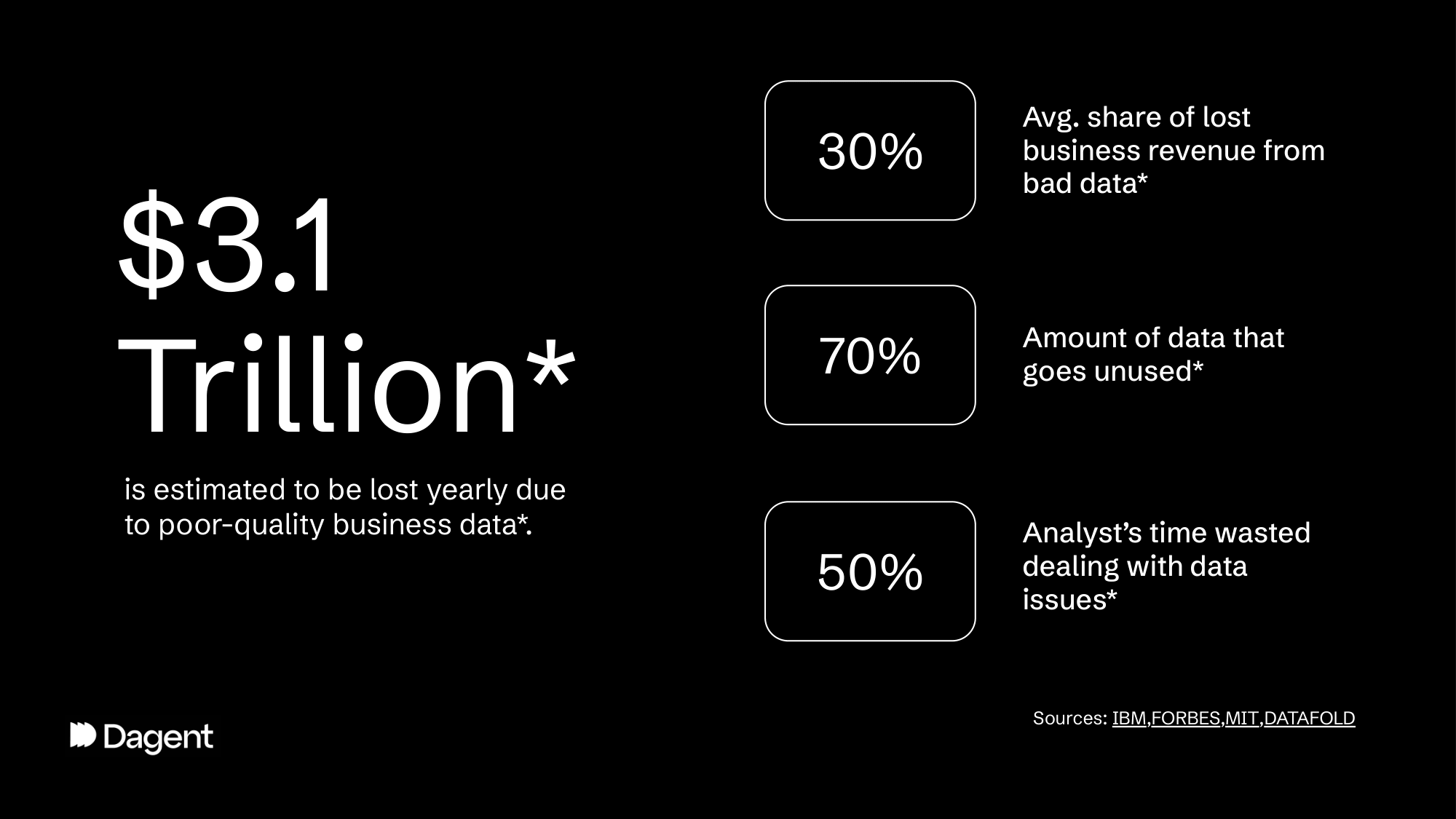
From those insights, we landed on three things that would actually move the needle for owner-operators juggling sales data, trends, and supply chain info across spreadsheets and tools.
01
Consolidate
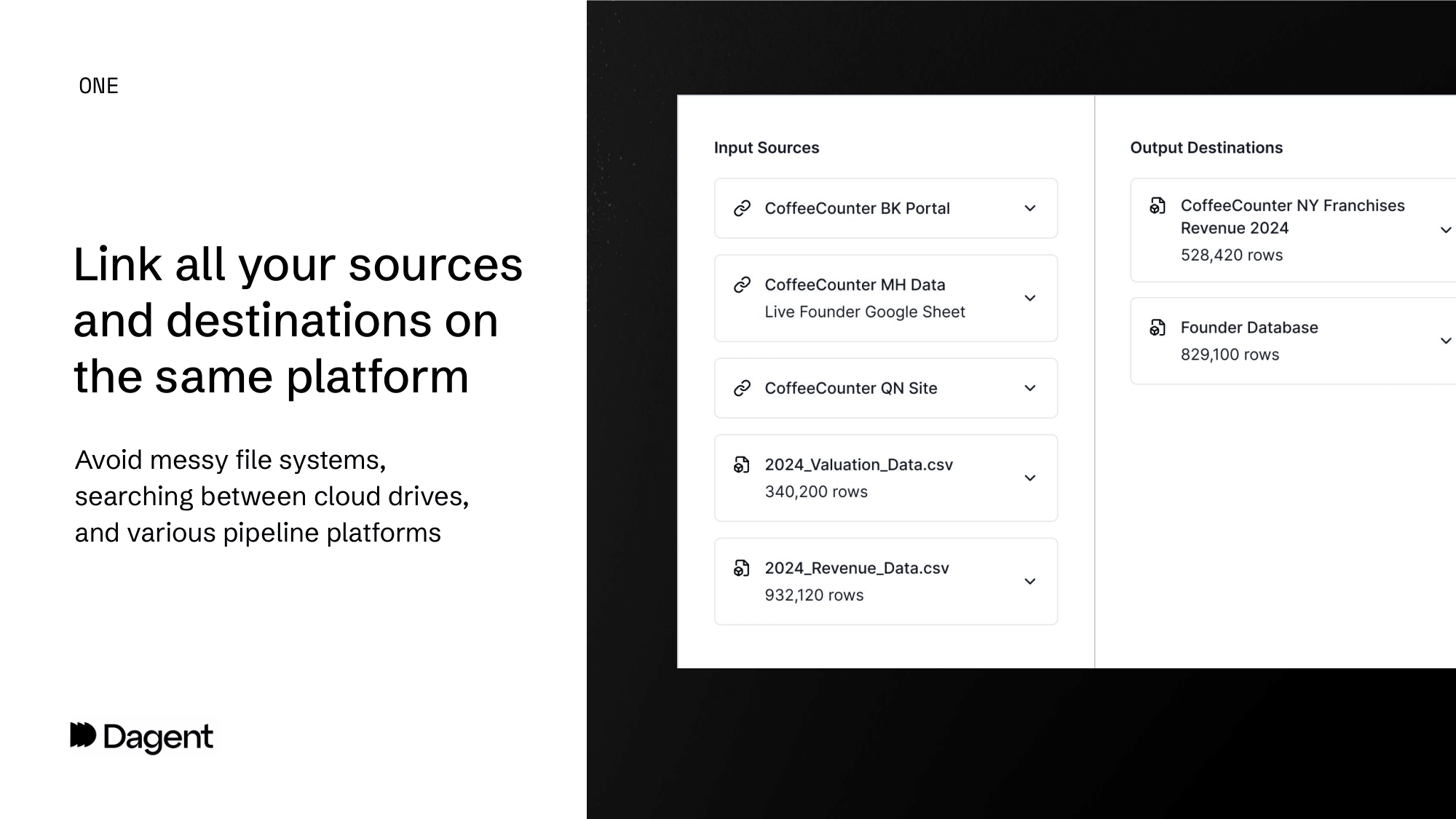
Consolidate all their sources and outputs in one canvas/workspace.
02
Automate
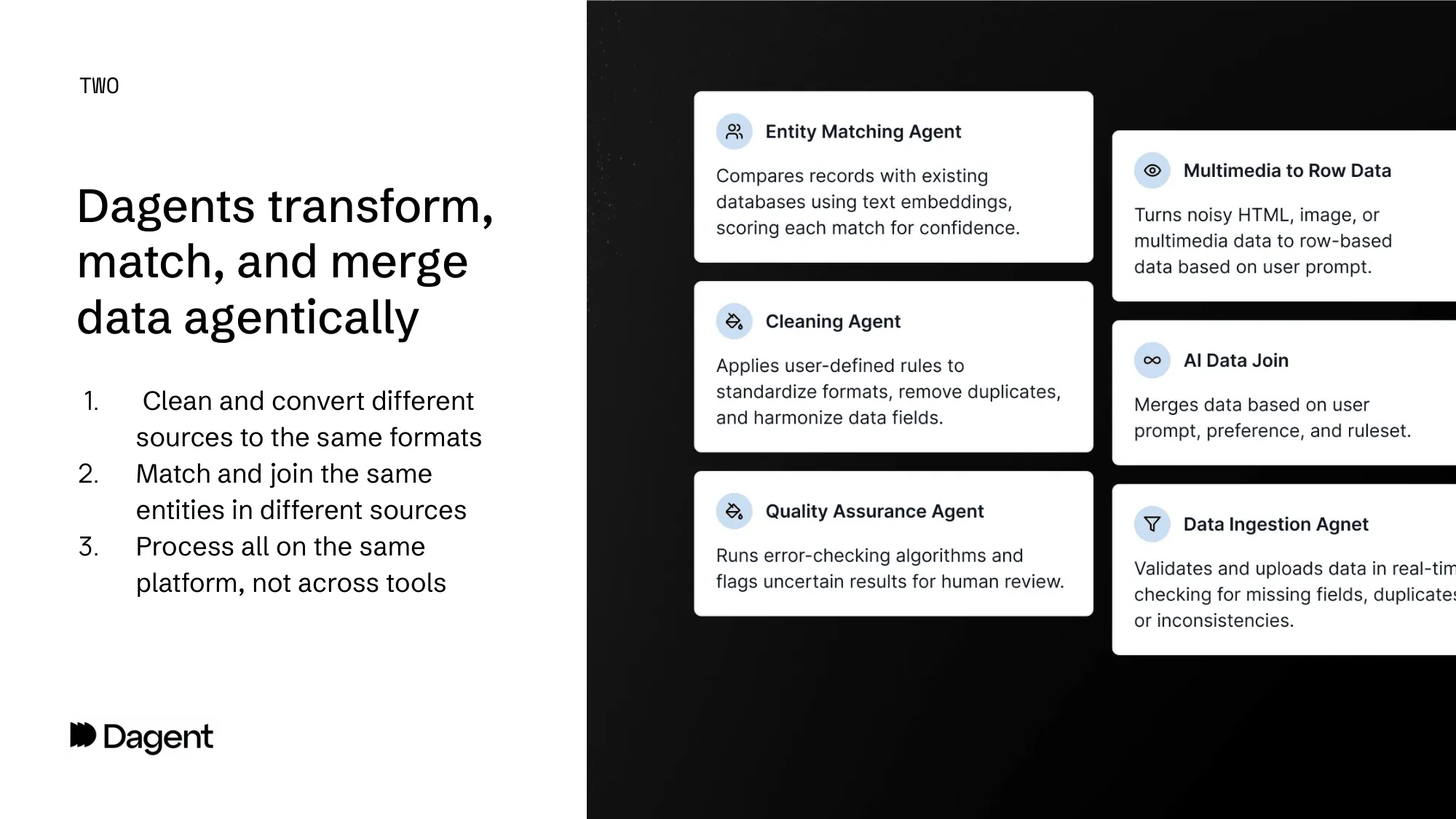
Automate as much busywork and useless stuff as possible, especially repetitive tasks, in clear and measurable ways.
03
Verify & iterate
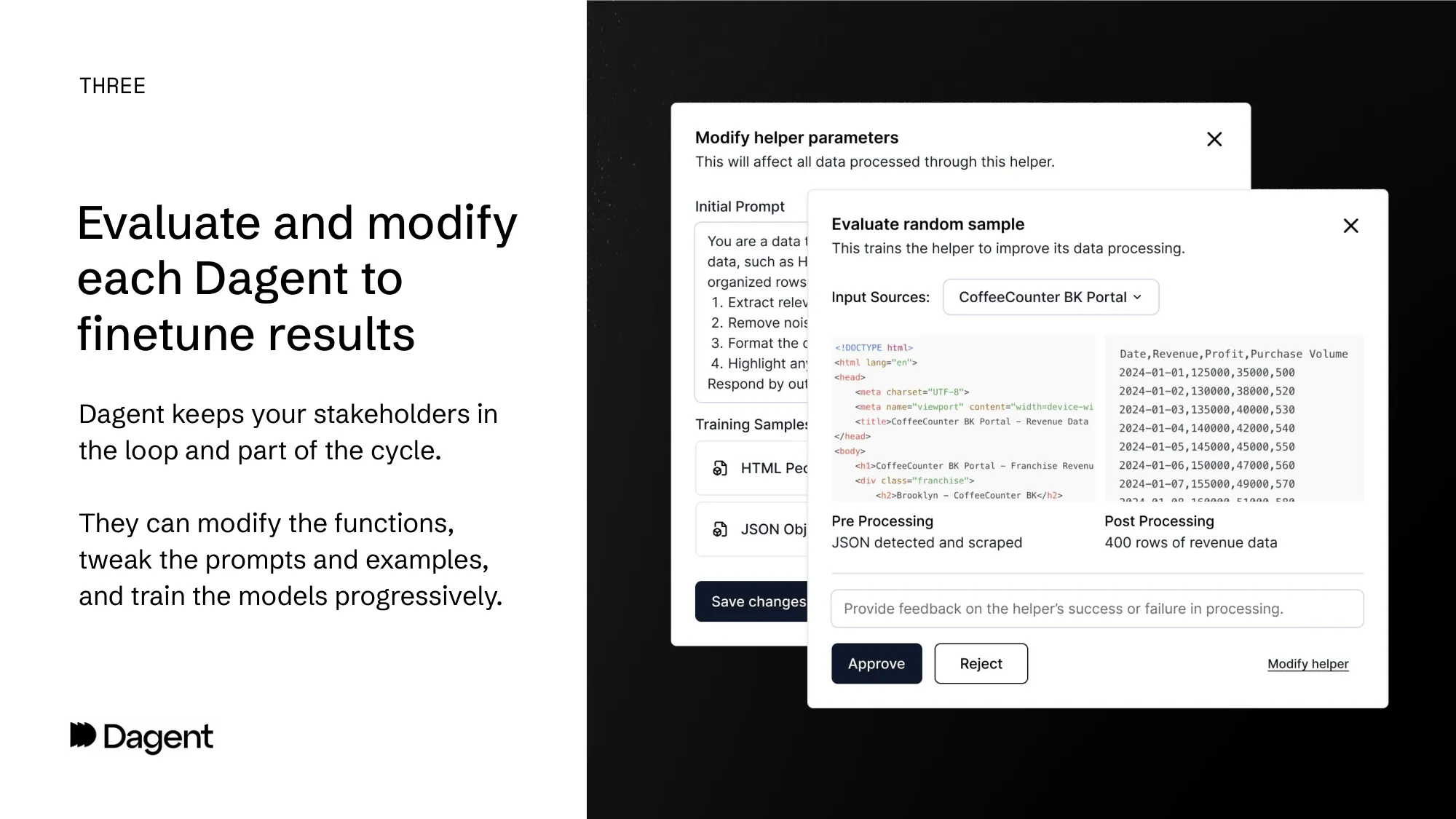
If we use LLMs, make sure we can check for any issues, finetune prompts/models, and be able to iterate.
We mapped those insights to Dagent: one interface to consolidate data, build workflows for repetitive tasks, and verify outputs from our automated "dagents".
TAKEAWAYS
Key learnings and outcomes
We pitched Dagent to judges from Pitchbook, major tech companies, and venture capital firms in New York and won first among 20 teams. We got excellent feedback from them and learned a lot about what worked and what didn't:
01
Always niche down
Knowing exactly that our target user persona was an owner-operator made all downstream product decisions easy. By nailing this focus early on, we easily weighed tradeoffs and prioritized some flows over others.
02
Usability is king
Our users didn't need fancy animations, so we focused on clear hierarchy, obvious calls to action, self-explanatory screens, and minding our conversion rates. For our niche of B2B software, that made all the difference.
03
Get the pattern right
We spent a lot of time picking metaphors that would be familiar to our users, like "compare A and B results" to check work or using easy drag-and-drop components. These were make-or-break in how instantly our users grasped the product.
The product definitely had its limitations. In a future iteration, I would test Dagent with specific real-world use cases and against measurable industry metrics or simulations to see if its assumptions break down under messy, unpredictable conditions. In particular, I'm curious about which specific business decisions Dagent would actually excel at and in what industries it would move the needle the most.